SEO Best Practices
On-page, technical, and off-page fundamentals — the SEO checklist that still compounds.
What this infographic is actually arguing.
SEO gets overcomplicated. Vendors sell you on the edge cases — log-file analysis, entity graphs, Core Web Vitals sub-decimals — while most B2B sites still have obvious fundamentals broken. This infographic is the checklist version of the part of SEO that compounds: on-page, technical, and off-page done in the right order.
On-page starts with a truthful H1 and a meta description that matches the keyword intent of the page. Most B2B teams write for the pitch deck and wonder why they don't rank — the H1 has to match what a buyer would type, not what the CEO wants said. Headings structure the skim. Internal links tell Google which pages are load-bearing. Alt text and descriptive image names are not optional. None of this is clever; it's just work.
Technical SEO is the part that either works or silently breaks everything. A site-wide noindex in a staging push, a botched canonical, a redirect chain through a legacy domain — any one of these can kill months of content effort. Audit your robots.txt, your sitemap, your crawl budget, and your indexable URL count on a fixed cadence. Page speed matters for CRO more than it does for rankings, but it matters either way.
Off-page is relationships and authority. Real citations, real backlinks, real mentions from domains your buyers trust. Paid link schemes still work until they suddenly don't, and recovering from a manual penalty costs more than the links ever saved. Earn mentions through publishable work — research, teardowns, original data — and make it easy to cite you correctly.
The second-order move most B2B teams miss: SEO doesn't exist alone anymore. AI answer engines — Perplexity, ChatGPT search, Google AI Overviews — pull from the same signals, but they reward clarity and citation-worthiness more than traditional SEO did. Generic, hedged copy ranks but doesn't get quoted. Sharp, claim-first writing gets both. Stratridge's AI Visibility tool checks whether the engines are quoting your site, misquoting it, or skipping past you to a competitor.
Foundational Marketing
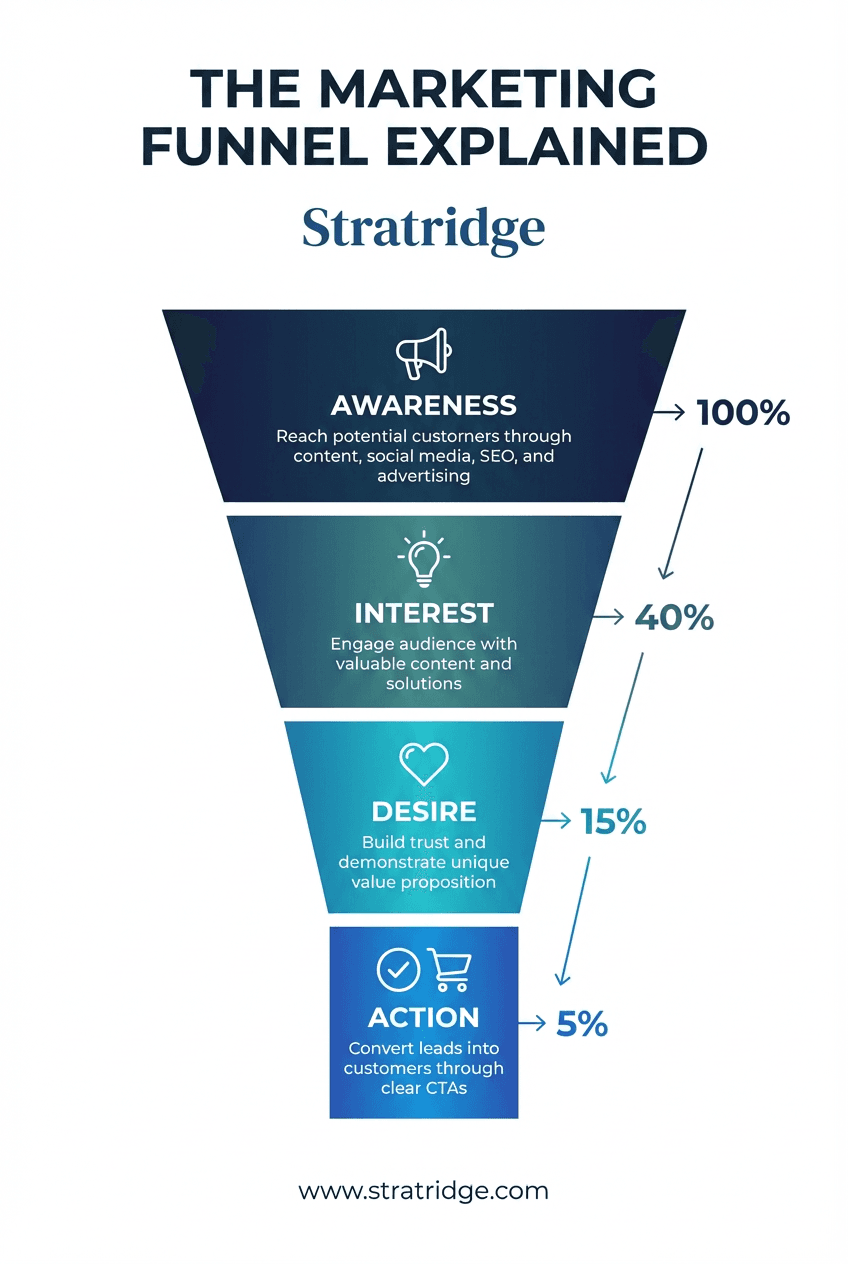
The Marketing Funnel Explained
The five funnel stages, what each one actually moves, and where most B2B teams leak.
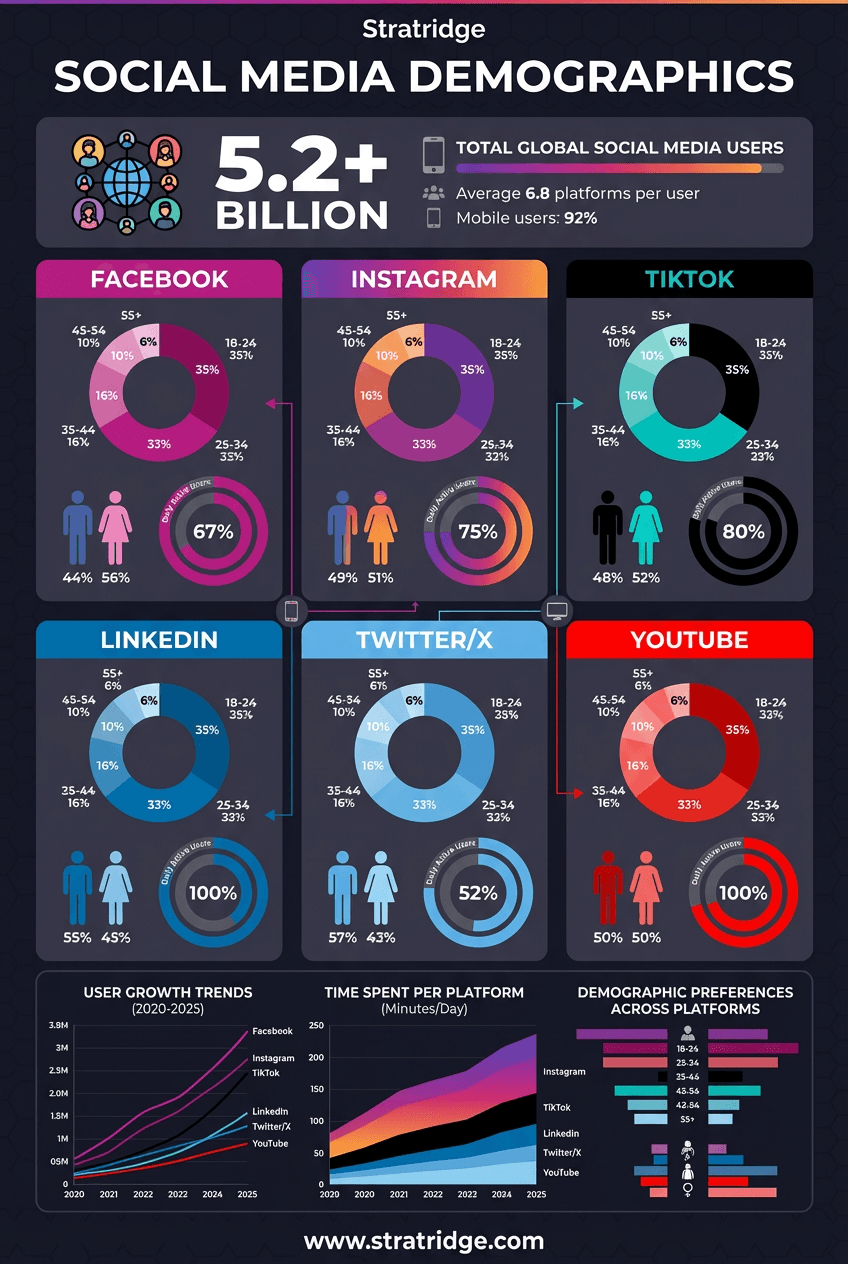
Social Media Demographics
Who is actually on each platform in 2025 — and the decision it forces on your channel mix.
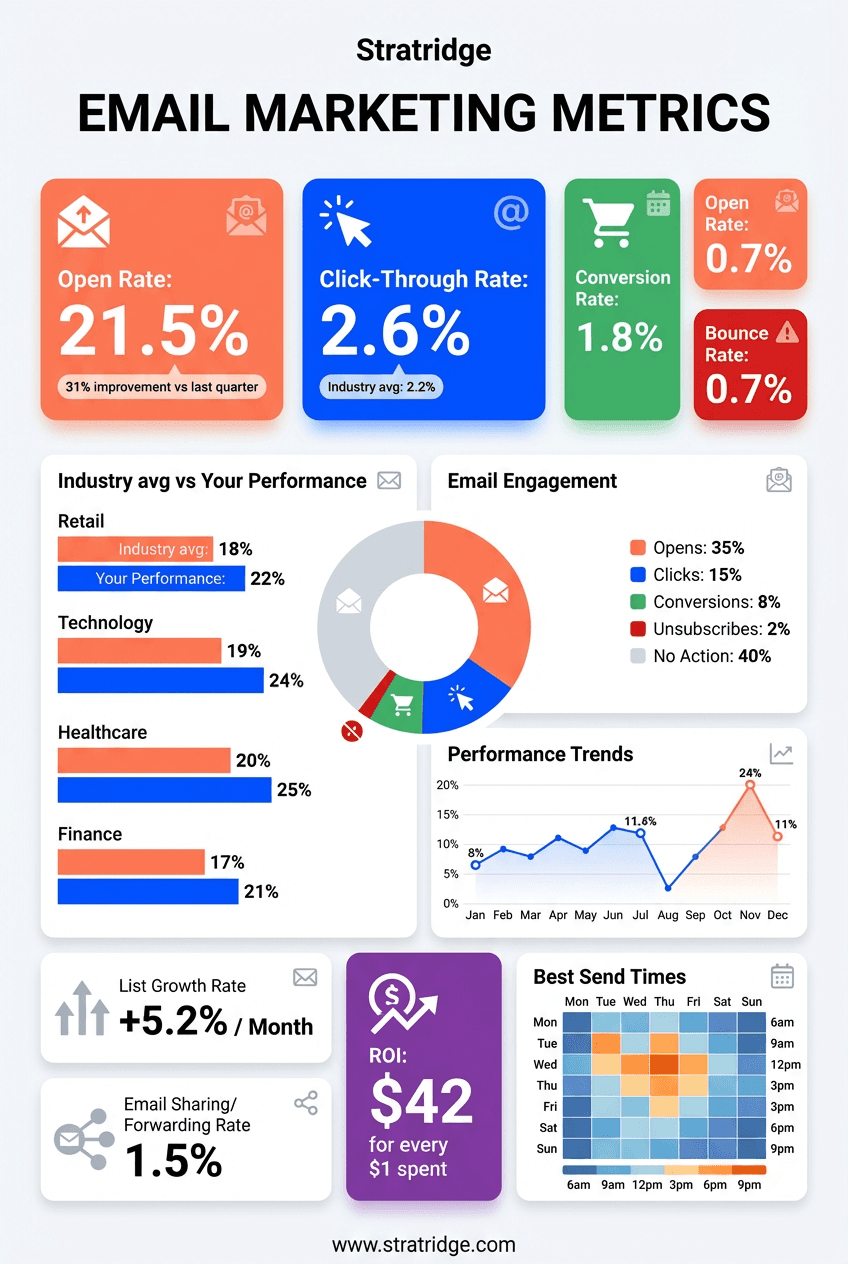
Email Marketing Metrics
The six numbers that matter, the three that don't, and what a healthy B2B program looks like.
This infographic is free. The audit is too.
Ninety seconds, no login. Paste your URL and Stratridge returns a Positioning Audit graded against the eight dimensions — so you see where the story on your site lines up with the story this infographic describes, and where it doesn't.