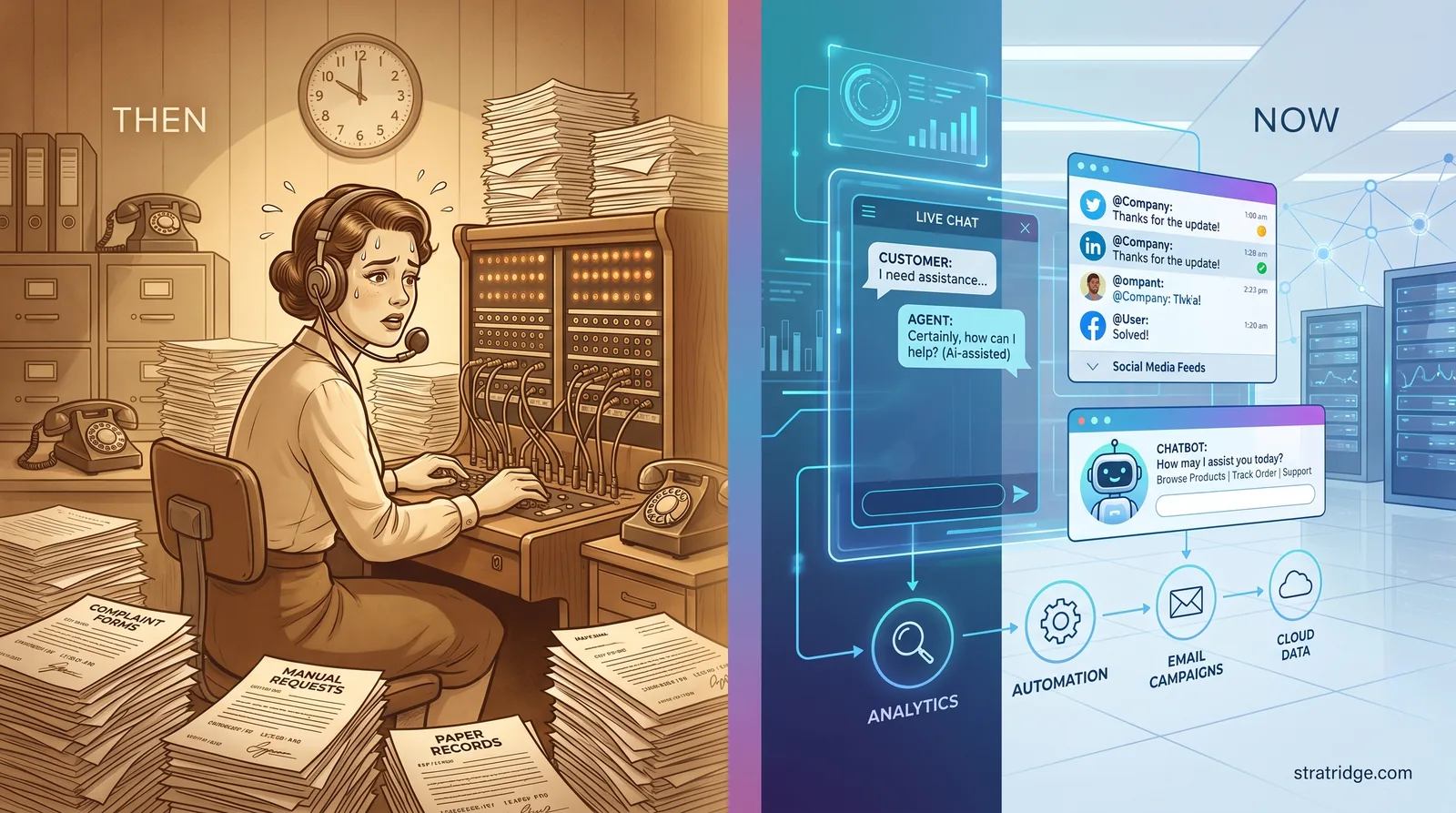
From call centers to omnichannel experience orchestration
Key contrasts
- Reactive Service → Proactive Engagement. Brands waited for customers to reach out with problems; proactive engagement now anticipates needs before customers even articulate them.
- Single Channel → Omnichannel Presence. Customer service operated through a single channel, usually phone; engagement now spans chat, social, email, app, and in-person seamlessly.
- Scripted Responses → Personalized Conversations. Agents followed rigid scripts; modern engagement platforms enable personalized, context-aware conversations at every touchpoint.
- Complaint Resolution → Experience Design. Engagement was focused on resolving complaints; it is now designed proactively to create positive experiences at every stage.
- Human-Only → AI-Augmented Service. Every interaction required a human agent; AI now handles routine queries, freeing humans for complex, high-value interactions.
- Siloed Teams → Unified Customer View. Sales, service, and marketing operated in silos; unified platforms now give every team a complete view of the customer relationship.
- Transactional Interactions → Relationship Building. Engagement was transactional — solve the problem, close the ticket; today, every interaction is an opportunity to deepen the relationship.
- Satisfaction Measurement → Loyalty Architecture. Success was measured by satisfaction scores; modern engagement strategy is architected to build genuine loyalty and advocacy.
Why service became the product
Customer engagement — the ongoing relationship between a brand and its customers beyond the initial transaction — has been transformed from a cost center into a strategic competitive advantage. In the era of the call center, engagement was largely reactive: customers called when they had a problem, agents followed scripts to resolve it, and success was measured by how quickly calls were handled and complaints were closed.
The proliferation of digital channels changed both customer expectations and brand capabilities simultaneously. Customers began to expect that they could reach a brand on their preferred channel — whether that was phone, email, live chat, social media, or in-app messaging — and receive a consistent, informed response regardless of where the conversation happened. Meeting this expectation required brands to invest in omnichannel infrastructure that unified customer data across every touchpoint.
Artificial intelligence has added a new dimension to engagement. Chatbots and virtual assistants now handle a significant proportion of routine customer queries, providing instant responses at any hour without human intervention. This has freed human agents to focus on the complex, emotionally charged interactions where empathy and judgment matter most.
The most forward-thinking brands have moved beyond reactive and even proactive engagement to predictive engagement — using behavioral data and machine learning to anticipate what a customer will need next and reaching out before they even realize they have a need. In this model, engagement becomes indistinguishable from genuine care, and the line between marketing and service dissolves entirely.
Customer engagement has evolved from reactive call center service to proactive, AI-augmented omnichannel relationship management — transforming a cost center into a loyalty engine.
Keep reading
Then & Now: The Shift in Brand Storytelling
From the single big campaign to always-on content — how brand storytelling became a year-round media operation rather than a seasonal event.
Then & Now: The Change in Email Marketing
From batch-and-blast to intelligent personalization — how email survived every eulogy and became one of marketing's sharpest channels.
Then & Now: The Evolution of Brand Identity
From static logos to living, dynamic brand systems — how brand identity shifted from a style-guide artifact to an operating system.